
The Problem With Putting Protein in Everything
When more isn't necessarily better

There’s a nutrition trend I’ve been noticing more and more in my practice that I think makes for an interesting discussion: the unintended consequences of putting protein in everything.
Recently, I’ve had several clients come in for their initial appointment with a similar story. They feel like they’ve been eating well, making healthier choices, and doing all the “things”, but they’re frustrated because their weight has unexpectedly started creeping up.
When we look more closely at what they’re eating, they’re getting an excess of one thing I didn’t expect: protein-fortified foods or supplements.
Prefer to listen?
✨New this week: I'm trying something different and have recorded an audio version of this week's newsletter. I'm planning to test this over the next few weeks to see how readers like it, so if you give it a listen, I'd love to hear your feedback. This isn't a word-for-word reading; it's more of a conversational version. Listen below 👇.
We’re being sold protein products as if more is always better. Protein is essential, yes. But protein is only beneficial when it’s solving a problem, a need. And honestly, most of the protein products on the market are selling a solution to a problem that many people don't actually have.
If your diet is lacking protein, adding more is a good move. But if you’re already getting enough, more won’t continue to provide a benefit. And in cases I’ve seen recently, the unintended consequence has been a higher overall calorie intake.
Some context…
Before I go further, I want to give you some context. I haven’t talked much about calories in my practice for about a decade. Mentioning calories brings me right back to the era of “low-calorie” and “100-calorie” everything lining the supermarket shelves, and that’s not a direction I want to return to.
For years, I deliberately moved away from talking about calories because they had become the entire conversation. Instead, much of my work has focused on helping people move away from fearing calories and toward the bigger picture: food quality, nutrient density, and overall dietary patterns. I’ve also spent much of that time encouraging people to prioritize protein because, for many, it’s a nutrient that has historically been used suboptimally.
But recently, I’ve found myself talking about calories again. Not because I think we should go back to counting them, but because they help illustrate something that’s easy to miss in today’s protein-obsessed food environment. Even with protein, more is not always better. And regardless of which nutrient we’re talking about, excess is still excess.
How we got here
The protein trend didn’t happen because people suddenly needed more protein. It happened because protein has become one of the strongest signals of "healthy" in today’s food environment.
Combined with the growing narrative that it is difficult (or even impossible) to meet your protein needs through whole foods alone, many consumers have started seeking out protein-fortified versions of foods they already eat, or adding protein supplements on top of their usual diet.
Because protein is associated with health, fullness, and muscle growth, many consumers don’t realize that the benefits of adding protein are not infinite. The messaging is this: protein is good, so more protein must be better. And this can add up quickly.
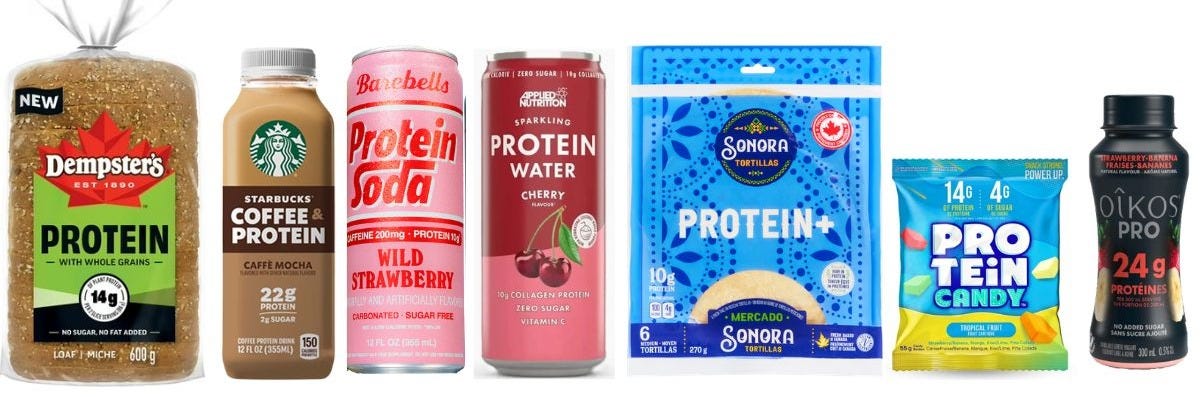
Protein bread. Protein pasta. Protein coffee. Protein soda. If you’re choosing between regular whole grain bread and a protein-fortified version, today’s marketing tells us the protein bread is automatically the better choice. After all, it has more protein.
Is the extra protein actually helping you?
Added protein is only beneficial if it’s solving a problem for you. If you’re making a vegetarian sandwich and your meal is falling short on protein, a higher-protein bread may help fill in the gap. But if that same sandwich already contains chicken, tuna, or another protein source, the added protein may not provide any meaningful benefit.
Here’s a common example that I see in my practice to illustrate my point.
A typical day:
Breakfast: 2 eggs, 1 slice of whole grain toast, apple
AM: Coffee with milk
Lunch: Tuna sandwich (2 slices bread, ~½ can tuna, small amount of mayo/Greek yogurt, vegetables) + veggie sticks
Snack: ½ cup Greek yogurt, fruit, ⅓ cup nuts
Dinner: Rice with 4 oz chicken, steamed broccoli
This day provides approximately 2,000 calories and 110 g of protein
For someone weighing 165 lb (75 kg), that equals approximately 1.5 g protein/kg, already well within a range that can support muscle growth if that’s the goal.
Now let’s swap in some of the protein-fortified options many people are adding:
Breakfast: 2 eggs, 1 slice whole grain protein toast, apple
(+40 calories, +6 g protein)
AM: Protein coffee
(+120 calories, +20 g protein)
Lunch: Tuna sandwich on protein bread + veggie sticks
(+80 calories, +12 g protein)
Snack: ½ cup Greek yogurt, fruit, ⅓ cup nuts
Additional: Protein beverage
(+170 calories, +24 g protein)
Dinner: Rice with 4 oz chicken, steamed broccoli
This version provides approximately 2,400 calories and 170 g of protein. That’s an additional 50 g of protein and 400 calories compared to the original day.
Protein is important. But more protein is not automatically better.
My point here is not necessarily to avoid these protein foods. If you’re trying to gain weight, have higher protein needs, or genuinely struggle to get enough protein in your day, these products can be great tools. But if you’re already meeting your protein needs, adding more protein isn’t automatically an upgrade.
The irony is that one of protein’s biggest benefits is its ability to help regulate appetite. Including adequate protein in a meal can increase fullness, help manage hunger, and improve portion control. But that’s not how many protein products are being sold today.
Instead of replacing lower-protein foods or filling a genuine nutritional gap, they’re often layered on top of an already adequate diet. The very nutrient that can help prevent overconsumption is now being marketed in ways that can encourage us to overconsume it.
In the example above, nothing else about the person's eating pattern changed. They simply swapped in a few protein-fortified products. The result? An additional 50 g of protein, which might sound impressive in today's food environment, but also several hundred extra calories that weren't needed in the first place.
One of the challenges with many processed foods is that they're formulated to make certain nutrients easy to consume in excess, whether that's saturated fat, sodium, added sugars, or refined carbohydrates. As I look at today's food environment, I can't help but wonder whether we're watching the same pattern develop with protein.
The problem isn’t really about protein or calories. The problem is that we’ve been sold the idea that more protein is always better. The real question to ask yourself before you buy is: Is this protein product solving a problem I actually have?
For more on how much protein you need, you can check out my previous post: Protein: How much do you need, and does the source really matter? here.
Other protein posts you may enjoy…

Thank you for reading! Do you think protein will be the next over-consumed nutrient? I’d love to hear your thoughts. Let’s continue the discussion in the comments below!
“The Grocery Edit” is written by Brittany Raftis, MScFN, RD. She works as a Registered Dietitian and is passionate about helping people sort through the confusion of ingredients and nutrition facts to reduce stress surrounding daily food choices. She uses an evidence-based approach to clear up misinformation about nutrition and help people select the right products to support their health and enjoyment of food.
I agree with this wholeheartedly. I see this happen all the time. One of my favorite sayings is “if something is good- more isn’t better” and this is especially applicable to nutrition!
Absolutely true! I see this with my athletes too. Very few people need over 200g of protein in a day. More is not better. Usually between 25-35 grams per meal is fine for most.